
The holidays are busy with shopping, gifting, and deliveries. Unfortunately, they are also one of the busiest times for scammers. Fraud rises sharply at the end of the year because scammers know people are distracted, shipping volume increases, and online deals move quickly. Holiday scams range from fake websites to phishing messages, unexpected packages, and fraudulent charity appeals.
The good news is that awareness is one of the strongest forms of fraud prevention. Understanding how scammers operate can help you protect your money, avoid holiday fraud, and shop with confidence this season.
Watch out for unexpected packages
“Brushing scams” are becoming more common during the holidays. This scam involves receiving a package addressed to you even though you did not order anything. Scammers use these shipments to verify stolen information or create fake “verified buyer” profiles on marketplace sites. Recent reports show the tactic has increased alongside holiday delivery volume.
If an unexpected package arrives:
- Don’t pay for return shipping.
- Don’t contact the seller using information inside the box.
- Review recent orders to confirm nothing is missing.
- Monitor your credit and financial accounts for unusual activity.
- Report suspicious charges right away.
Staying proactive helps prevent a brushing scam from turning into account misuse later.
Avoid fake retail websites and suspicious discounts
Scammers create fraudulent shopping sites that look nearly identical to well-known retailers. These sites often advertise unusually low prices or limited-time holiday discounts to get shoppers to act quickly. If it sounds too good to be true, it probably is. Look for warning signs, including:
- Misspelled or confusing URLs
- Unsecured checkout pages
- No clear return policy
- Prices that are much lower than typical seasonal sales
Before entering card information, type the retailer’s name directly into your browser instead of clicking ads or links. Verifying the URL is a simple way to prevent credit card fraud and protect your personal information during holiday shopping.
Be cautious with marketplace listings
Holiday scams can also occur on resale platforms, especially when buyers feel pressured to purchase sold-out items or last-minute gifts. Fraudsters rely on the sense of urgency that holiday shoppers feel.
To stay safe on marketplaces, consider these practices to help reduce the risk of receiving counterfeit items or losing money to a fake listing.
- Use payment methods with purchase protection.
- Review seller ratings and recent reviews.
- Keep communication inside the platform.
- Avoid deals that require immediate payment or off-platform transactions.
Spot phishing attempts disguised as delivery updates
Delivery-related phishing messages rise every year during the holiday season. Scammers send texts or emails claiming your package is delayed, needs address confirmation, or requires a small fee to release it. These messages are designed to look legitimate but lead to fake login pages or malware.
- Don’t click links in unexpected texts or emails.
- Check shipping information directly through the retailer or carrier.
- Delete any message requesting personal information or payment.
- Use official carrier apps for real-time tracking.
Slowing down to verify the source is one of the most effective forms of fraud prevention during the holidays.
Protect your digital payments and accounts
Online shopping increases the chance of exposure to compromised websites, public Wi-Fi risks, and unauthorized card use. Strengthening your digital habits helps prevent credit card fraud and unauthorized account activity with these simple steps.
- Enable account alerts to track activity quickly.
- Turn on multifactor authentication.
- Use strong, unique passwords.
- Avoid public Wi-Fi for shopping or banking.
- Confirm recipients before sending P2P payments.
SECU supports fraud prevention with several digital security tools. Members can set up alerts for balance changes, large withdrawals, debit or credit card activity, and ACH transactions. We also offer security alerts when account settings change, such as address, phone number, email, username, or password updates.
These tools make it easier to stay aware of potential issues throughout the holiday season.
Recognize charitable giving scams
At the end of the year, charitable giving increases and scammers take advantage by creating fake nonprofits or impersonating real organizations. Before donating, take a moment to confirm the organization is legitimate. It is an easy way to give confidently and send a holiday ‘bah-humbug’ to anyone trying to fake a good cause.
- Search for the charity through trusted databases
- Give only through the organization’s official website
- Review spelling, logos, and contact information for accuracy
- Avoid requests for gift cards, wire transfers, or rushed payments
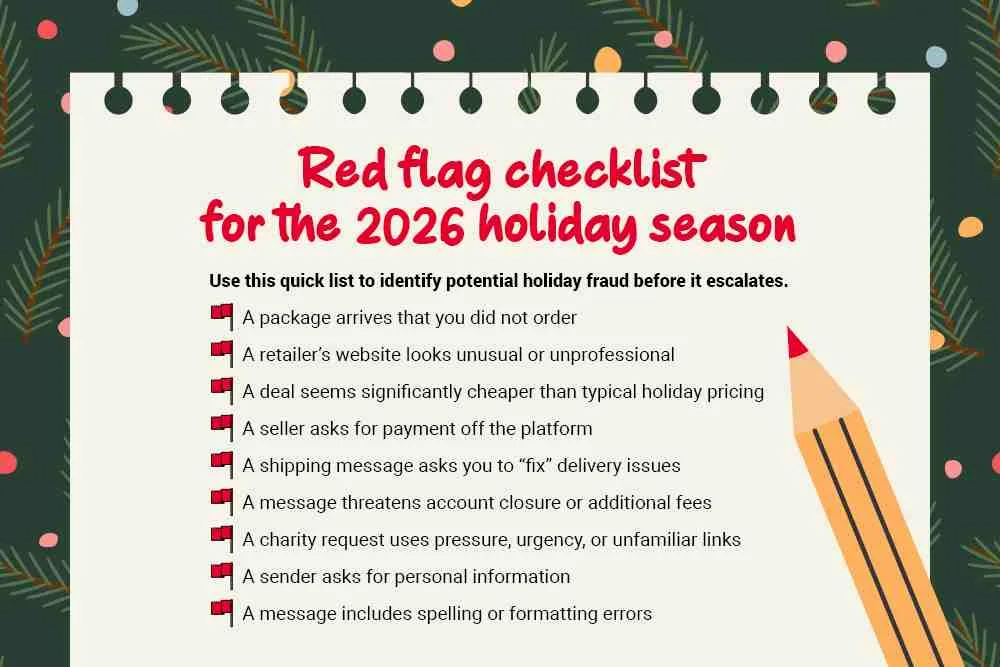
Red flag checklist for the 2026 holiday season
Use this quick list to identify potential holiday fraud before it escalates.
If something feels rushed or out of place, pause and verify it’s legitimate. Have other fraud questions? We’ve got you covered with frequently asked questions.
A safer season starts with awareness
Holiday scams work when shoppers feel pressured, overwhelmed, or rushed. By slowing down, checking sources, and using the right tools, you can protect your accounts and enjoy a safer season. Staying informed, monitoring your accounts, and recognizing early signs of fraud can help you avoid issues before they develop. Explore our additional fraud protection resources to learn more about how to stay secure this holiday season.

